Stone as Brand Language: Natural Stone in Retail Design
How natural stone shapes identity, drives customer experience and performs where it matters most in retail environments.
Natural stone plays an increasingly important role in retail design, helping brands communicate quality, craftsmanship and authenticity while meeting the demands of busy retail environments. More than a premium finish, it shapes how a space is experienced, how a brand is perceived and how well an interior performs over time.
There is a moment, walking into a well-designed retail space, when you register quality before you are consciously aware of it. The floor beneath your feet, the weight of the surfaces and the way light falls across a wall all contribute to that impression. These responses form quickly, and they last. For retailers who understand this, natural stone has become one of the most deliberate elements within the design palette.
The conversation around stone in retail has shifted considerably in recent years. What was once a high-end finishing detail has become central to brand expression. Across boutique retail, flagship stores and luxury retail destinations, specifiers are selecting natural stone not simply because it is beautiful, but because it communicates something other materials cannot.
Natural Stone as Brand Identity
Walk through a flagship retail environment and the relationship between materiality and brand often becomes immediately apparent. Brands such as Prada have long understood this. Its concept stores feature black marble façades that frame entrances and windows, turning the exterior into a brand statement before a customer even crosses the threshold.
For Australian retailers and developers working at the premium end of the market, the same principle applies. Natural stone communicates permanence, craftsmanship and confidence, implicitly telling customers that the brand behind the space is serious about quality.
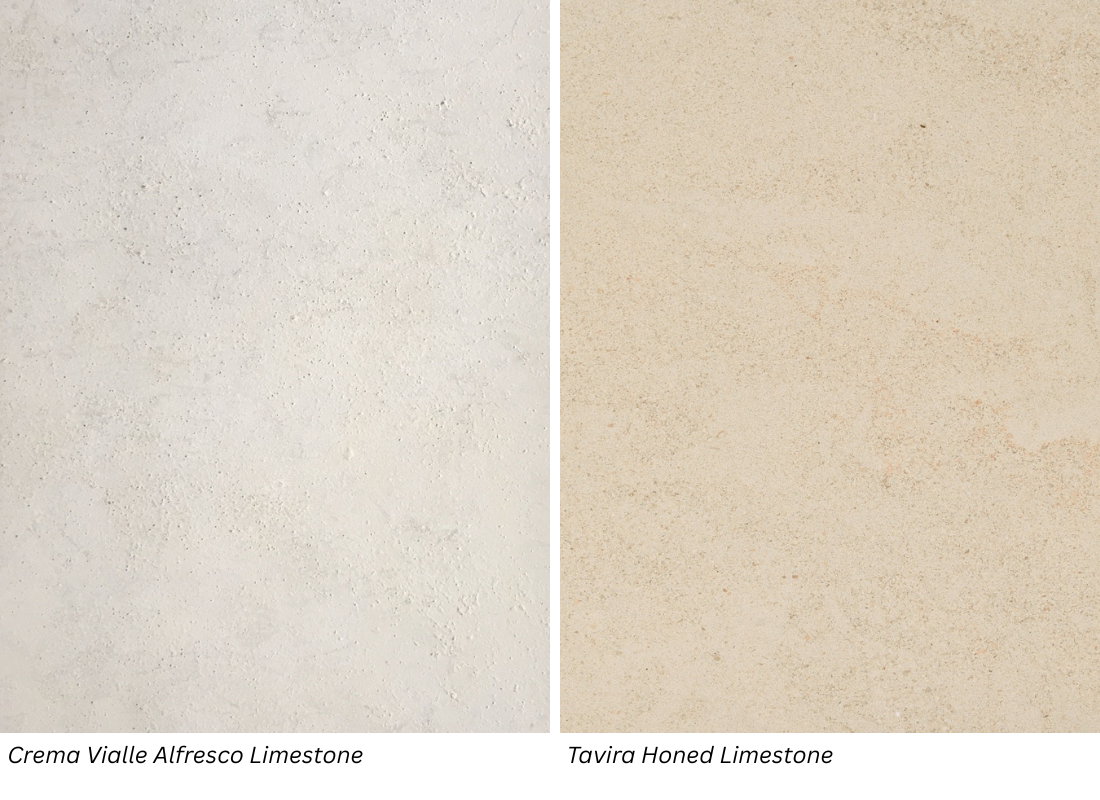
A clear example is the Rebecca Vallance boutique within Sydney’s historic Strand Arcade, designed by Archer Design. Crema Vialle Limestone was specified for the main signage wall, creating a softly textured backdrop to the polished brass branding. Its gentle cream tones bring depth without competing with the brand’s bold fashion collections, reinforcing a sense of craftsmanship and enduring style.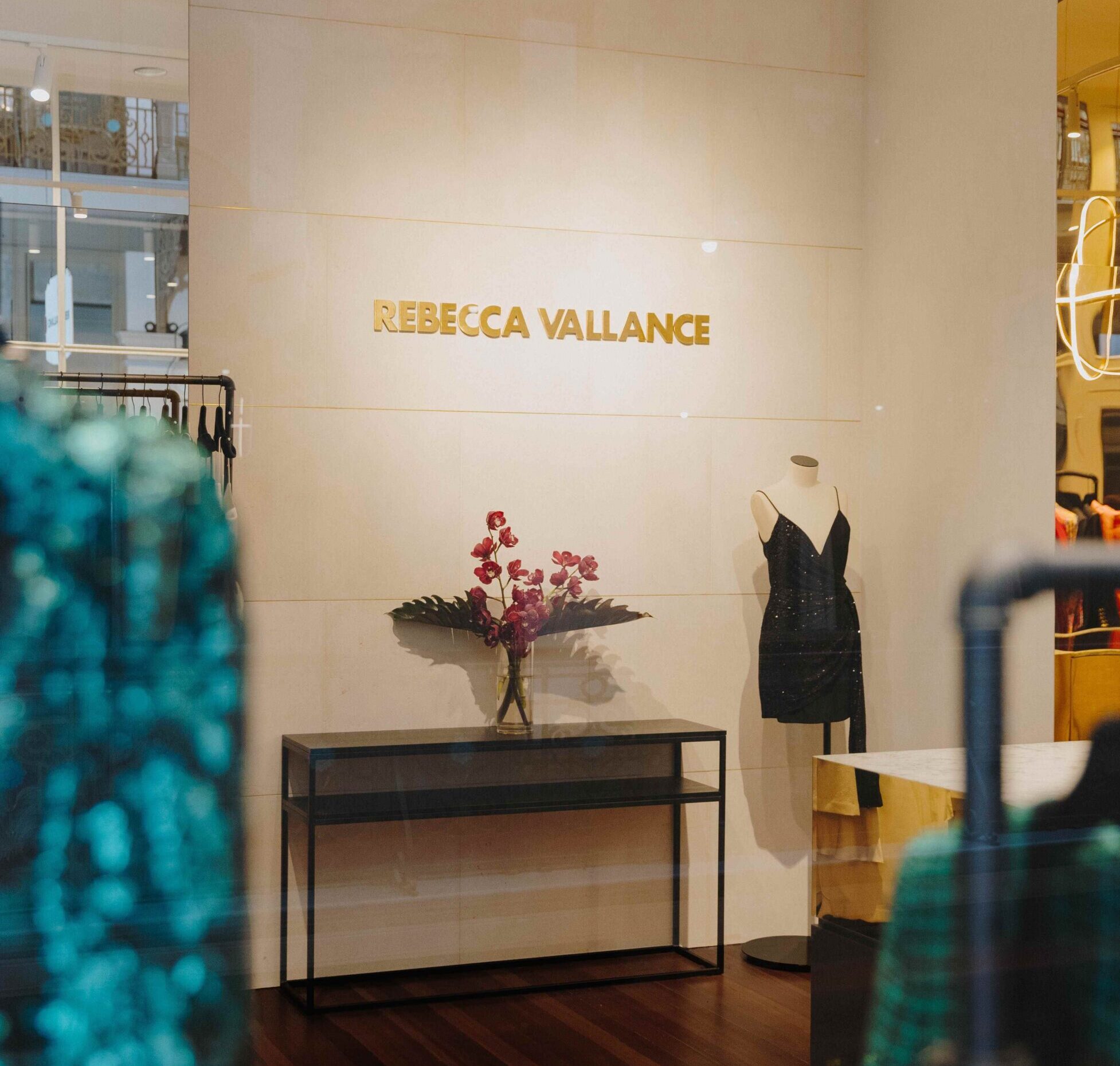
What Natural Stone Brings to Retail Design
The case for natural stone in retail environments is not purely aesthetic. It is sensory and psychological. Research into retail design consistently highlights the role of tactile and material quality in shaping how customers perceive a brand and how long they choose to remain in a space.
Natural stone engages multiple senses at once: the visual richness of natural veining and colour variation, the cool, smooth surface underfoot and a sense of weight that manufactured alternatives struggle to replicate. Together, these qualities create an immersive environment where the physical experience becomes inseparable from the brand experience itself.
Whether it is granite quarried from a particular region or limestone formed over thousands of years from compacted marine material, natural stone carries a story of place and process. For brands built around authenticity and craftsmanship, this provenance adds another layer of meaning that manufactured materials simply cannot replicate.
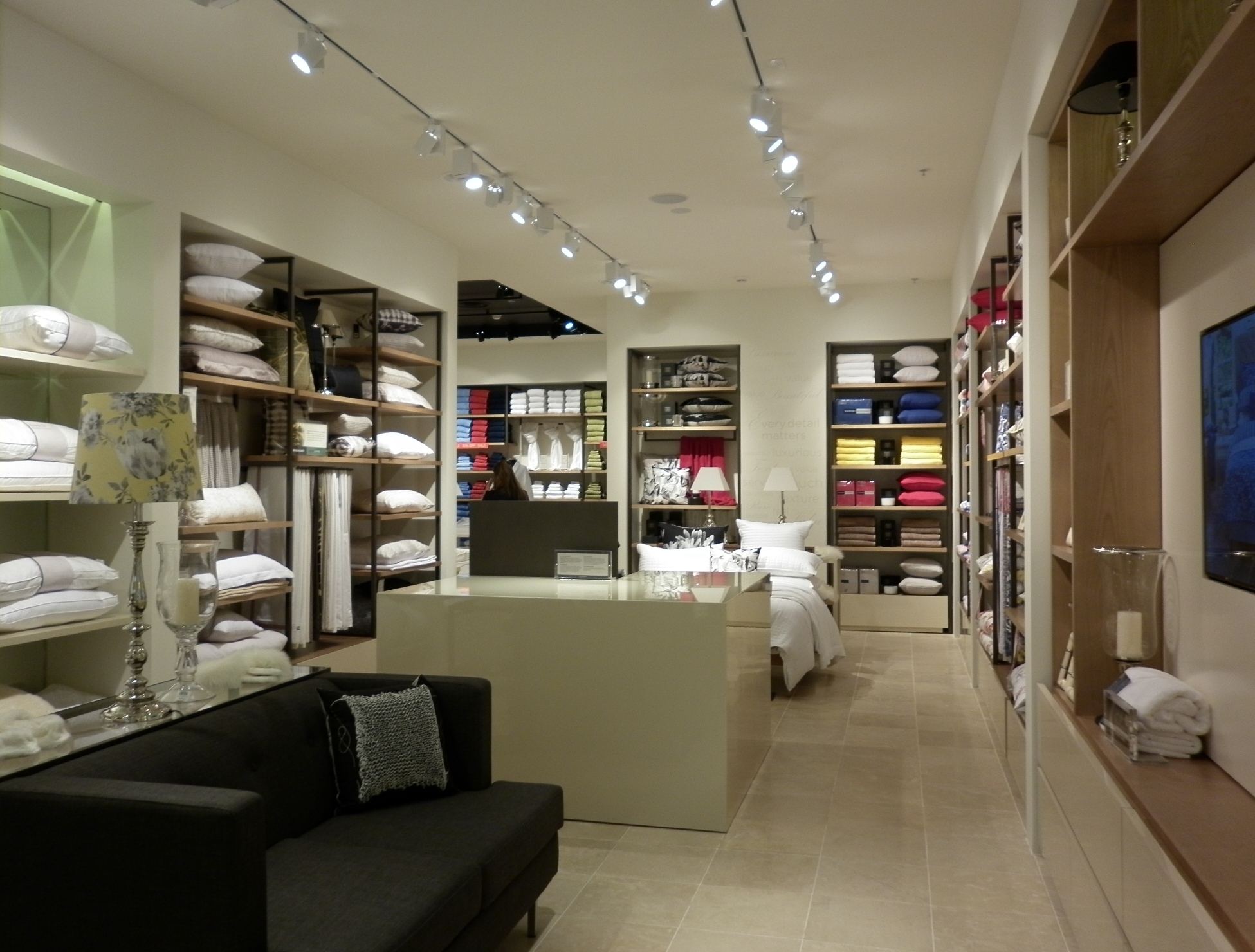
How Natural Stone Shapes the Retail Experience
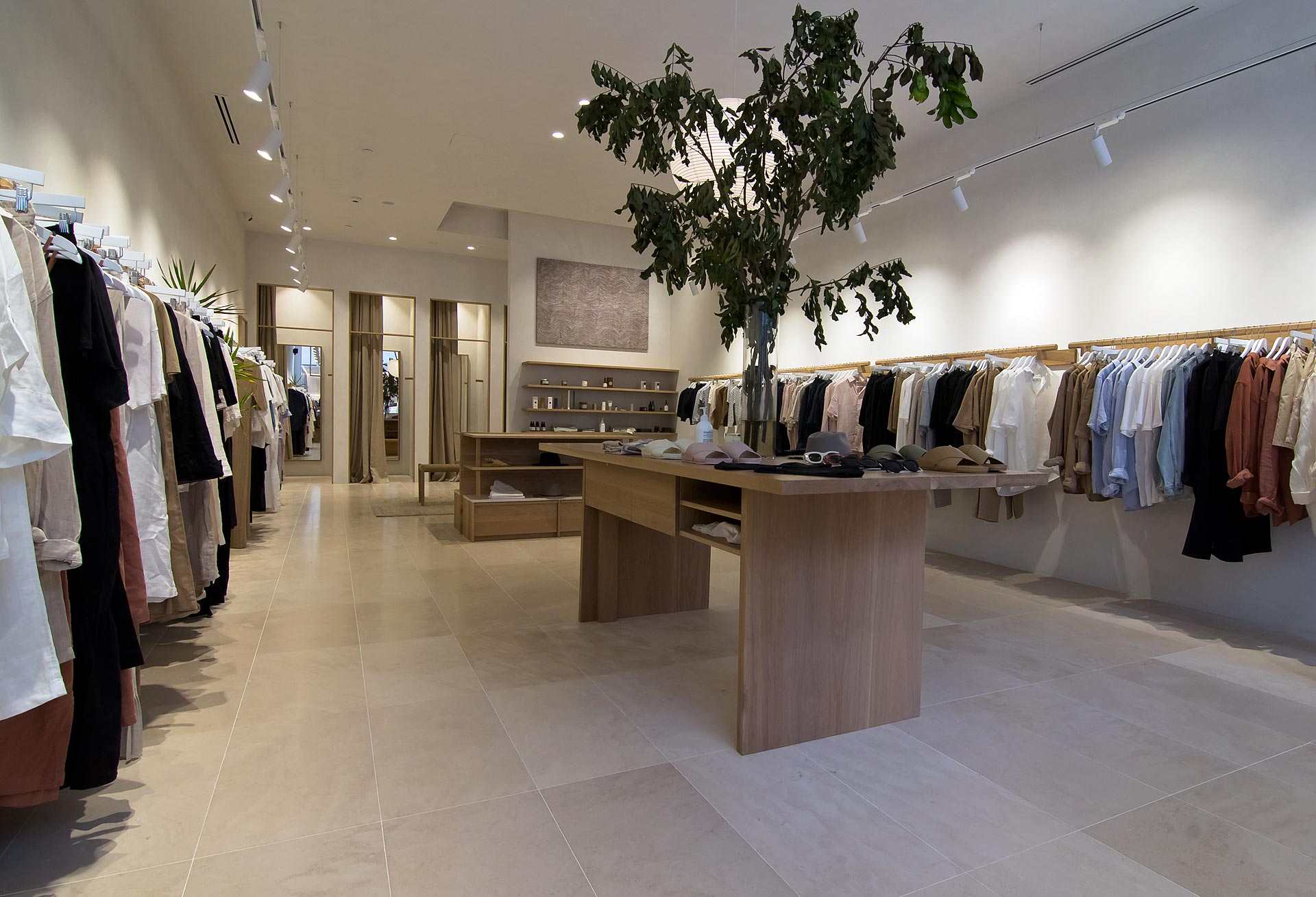
At the Nespresso Boutique in Chadstone, Victoria, Tavira Honed Limestone was selected as the primary flooring, specified by McCredie, supplied by Sareen Stone and installed by Alexander Interiors. Its soft neutral tones create a calm, consistent foundation connecting the retail, consultation and tasting zones, complementing the warm timber joinery without competing with the colourful capsule displays.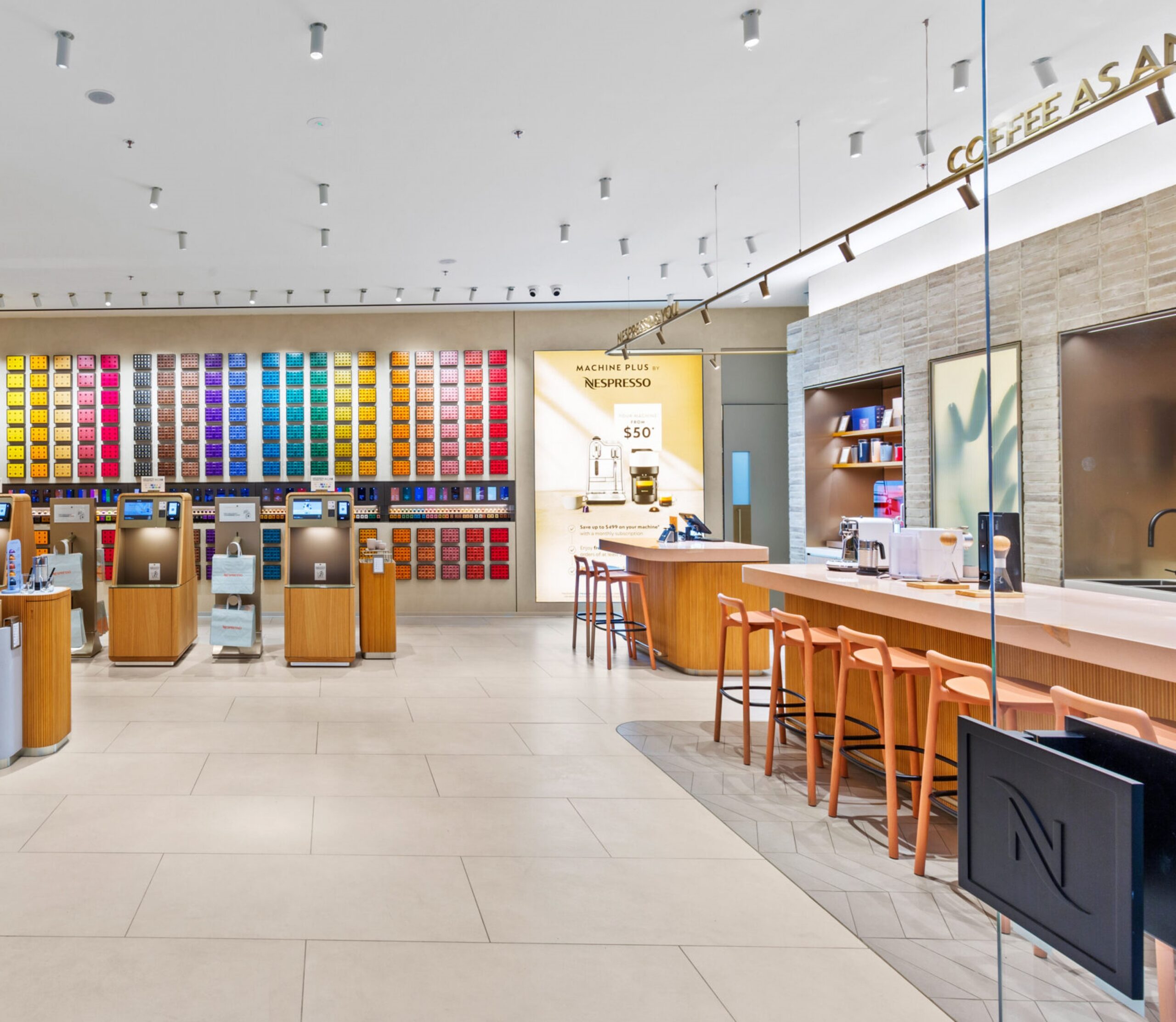
The same approach carries through to Nespresso Boutique Karrinyup in Western Australia, also specified by McCredie and installed by Focus Shopfit, where Tavira Honed Limestone again anchors the retail floor, reinforcing a consistent brand experience across locations.
Rather than dominating the space, the material acts as a quiet, enduring backdrop, contributing to stores that feel warm, sophisticated and carefully resolved.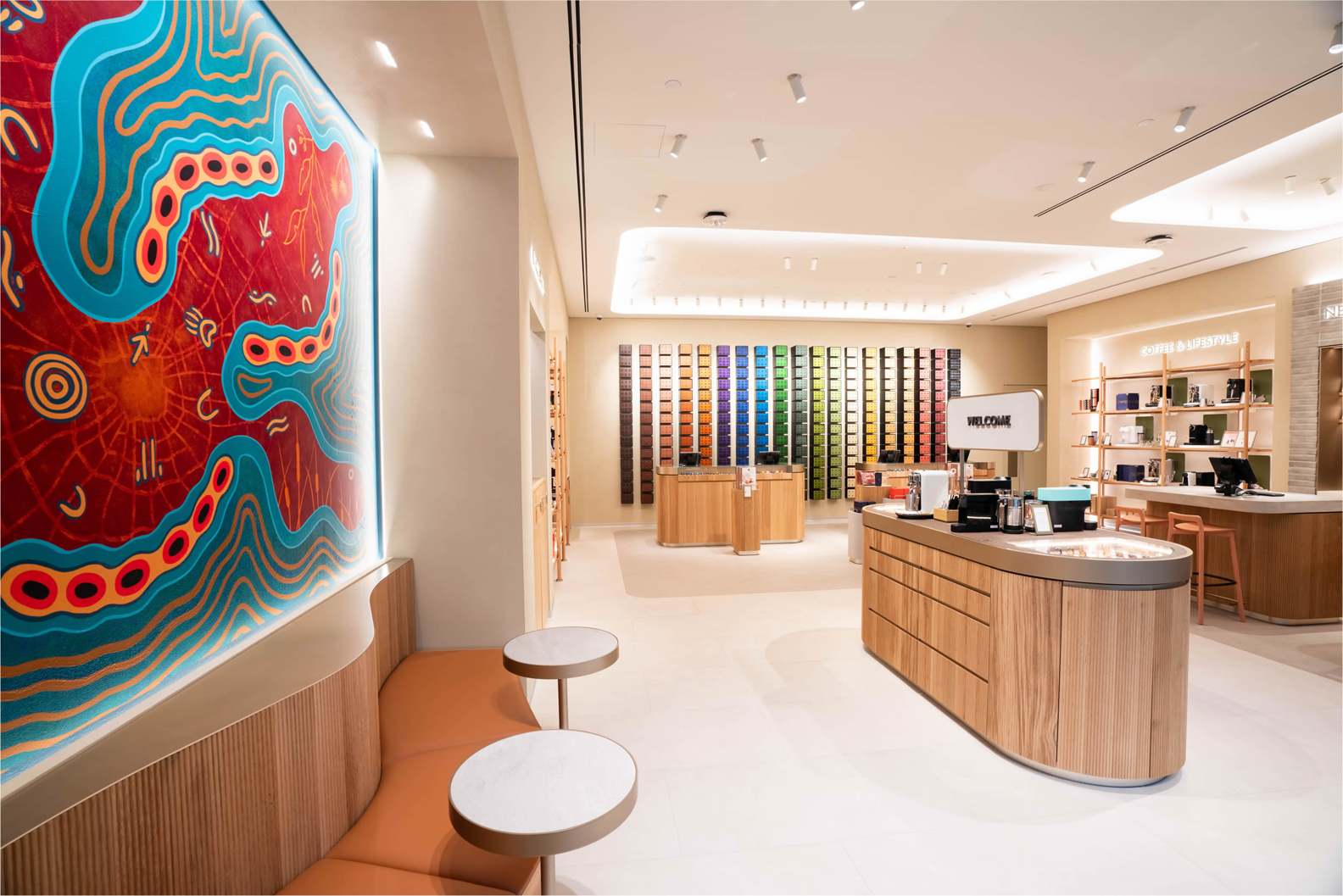
Performance in High-Traffic Retail Environments
The design argument for natural stone is well established. The performance argument is equally compelling, though it relies on considered specification.
Retail surfaces face high foot traffic, moisture, cleaning chemicals and constant use, conditions that can cause less durable materials to deteriorate within a few years. When correctly specified, natural stone can outperform many alternatives.
Selecting the appropriate stone and finish matters. A honed limestone suited to a dry interior may not perform well in a moisture-exposed entry, while granite’s density makes it one of the most reliable materials for demanding commercial environments.
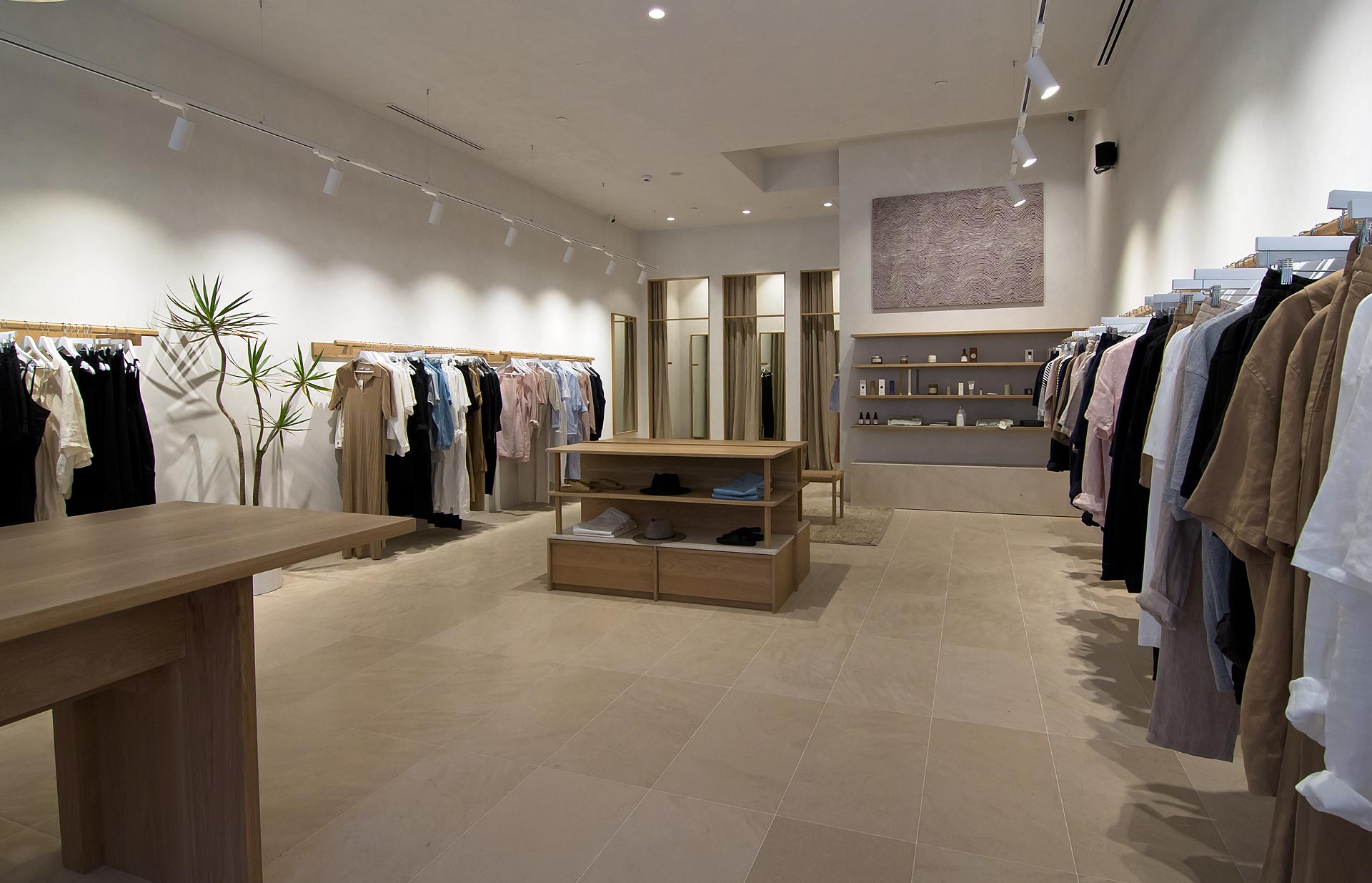
The Assembly Label fit-out in Karrinyup, Western Australia, demonstrates this. Specified by We Are Triibe, Tavira Honed Limestone was selected as the primary flooring, creating continuity throughout the store while withstanding daily foot traffic. Its earthy tones also contribute to the calm, minimalist interior, supporting Assembly Label’s brand.
Finish, Function and the Commercial Brief
One of the most effective specification strategies is using the same stone in different finishes to create visual continuity across spaces with varying performance requirements.
A honed finish delivers a refined appearance for internal areas, while textured or flamed finishes improve slip resistance where required. The material remains visually cohesive while each application performs according to its environment.
Engaging a knowledgeable natural stone supplier early in the design process also reduces the risk of selecting finishes that underperform or fail compliance requirements.
Questions worth asking include:
- What slip rating does this finish achieve under AS 4586?
- How will this stone perform over the next five to ten years?
- What maintenance schedule should be expected?
- Is this finish appropriate for the intended environment?
Maintenance: Planning for the Long Term
Natural stone requires ongoing care, and this should be considered from the outset rather than as an afterthought.
Sealing frequency depends on the stone type, porosity and expected traffic levels. Granite generally requires less frequent attention due to its density, while limestones and travertines benefit from more regular inspection and maintenance.
Retailers who achieve the greatest long-term value treat maintenance as part of the original design brief. Properly maintained natural stone performs better, ages beautifully and develops the character that makes it such an enduring architectural material.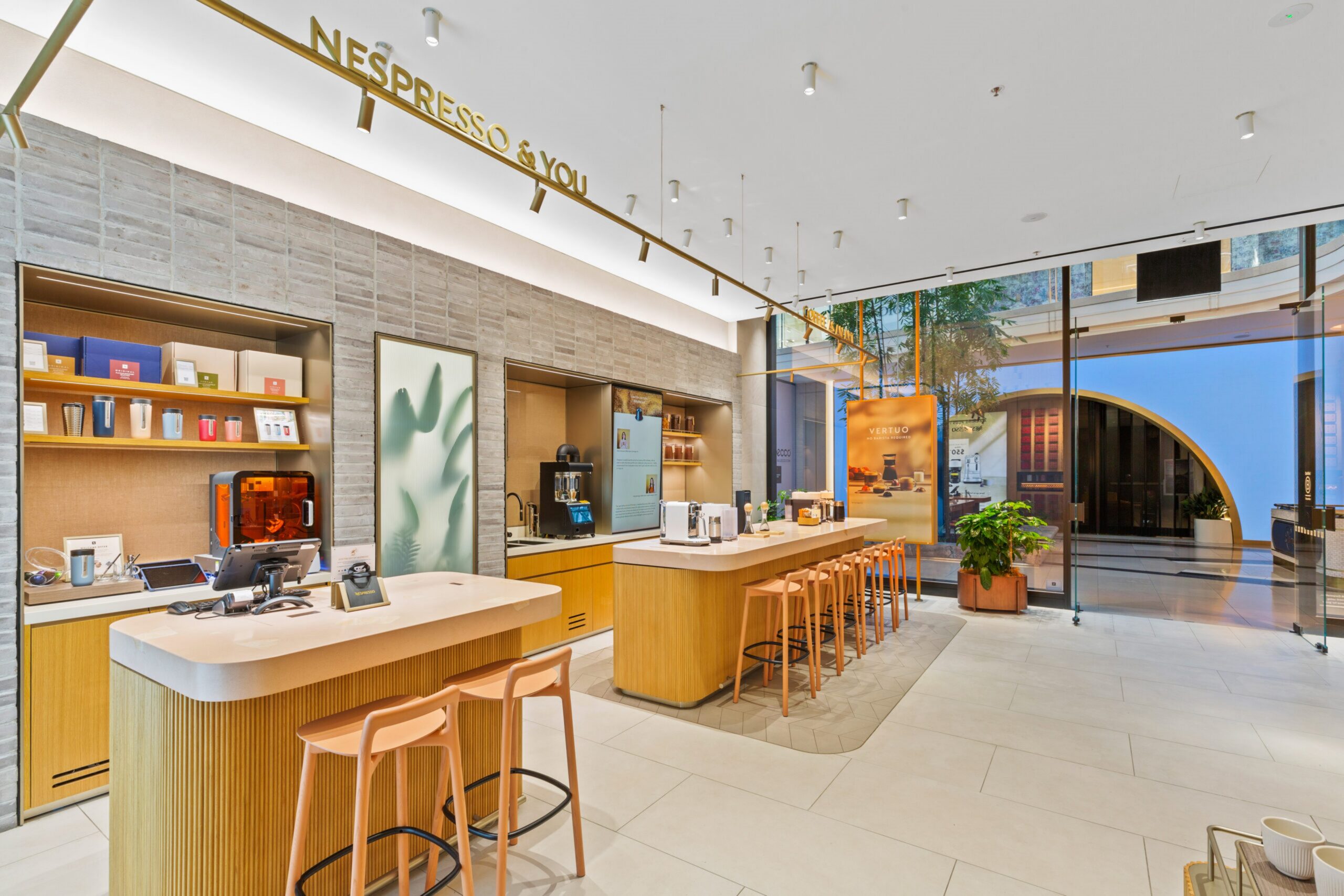
The Return of Genuine Materiality
Design continues to move away from synthetic finishes towards materials with genuine tactility, texture and presence. These are the spaces customers remember, photograph and return to.
As e-commerce continues to reshape retail, physical stores need to offer something online shopping cannot—a memorable experience.
The most successful retail environments of the future will not be defined by technology alone. They will be defined by thoughtful material selection and carefully considered design. Natural stone, when correctly specified and properly maintained, is uniquely positioned to help create those lasting experiences.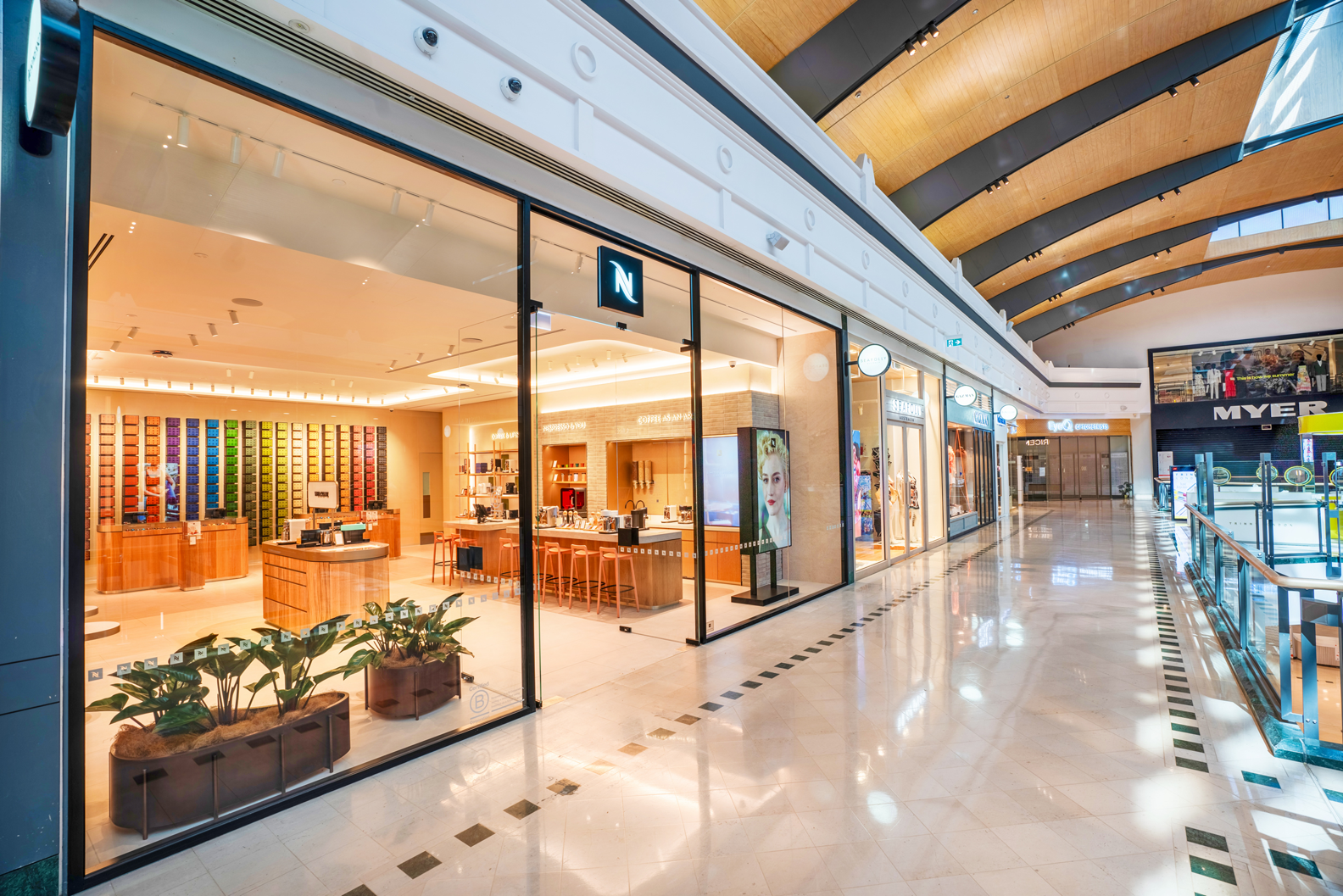
Planning a retail or commercial project?
Visit the Sareen Stone showroom in Artarmon to explore our curated range of natural stone or browse our commercial projects to see how architects, designers and builders are using natural stone across retail, hospitality and commercial spaces.
FAQs
Why is natural stone a popular choice for retail design?
Natural stone combines timeless aesthetics with long-term durability, making it ideal for retail environments. It helps create memorable customer experiences while reinforcing a brand’s identity through authentic materials and considered design.
Which natural stone is best for retail flooring?
The best choice depends on the project requirements. Limestone offers a refined appearance suited to many retail interiors, while granite provides exceptional durability for high-traffic areas. Selecting the appropriate stone and finish should always consider the intended use, maintenance requirements and slip resistance.
Is natural stone suitable for high-traffic retail environments?
Yes. When correctly specified and installed, natural stone performs exceptionally well in busy retail spaces. Choosing the right stone type and finish ensures it can withstand daily foot traffic while maintaining its appearance over many years.
How do you choose the right finish for a retail project?
The finish should balance aesthetics with performance. Honed finishes are often selected for interior retail spaces, while textured finishes may be more appropriate where additional slip resistance is required. A knowledgeable supplier can recommend the most suitable finish for each application.
Does natural stone require a lot of maintenance?
Natural stone benefits from regular cleaning and periodic sealing, depending on the stone type and level of use. With appropriate maintenance, it will continue to perform well and develop character over time, making it a long-lasting investment for retail environments.
Can the same natural stone be used throughout a retail project?
Yes. Many retail projects use the same stone in different finishes to create visual continuity while meeting the performance requirements of different spaces. This approach provides a cohesive design language without compromising functionality.