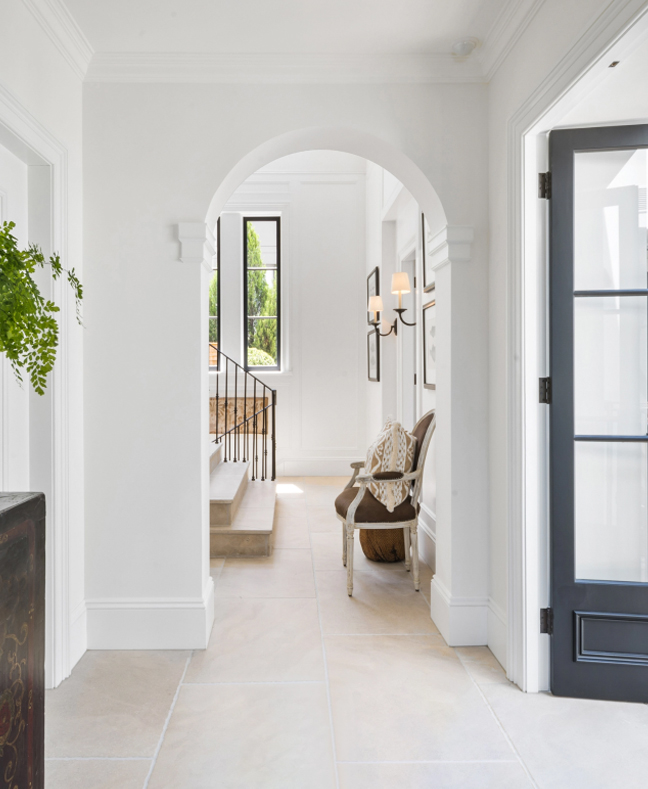
This week we compare natural granite to porcelain granite lookalikes. You might be surprised to find out that all is not what it may seem!
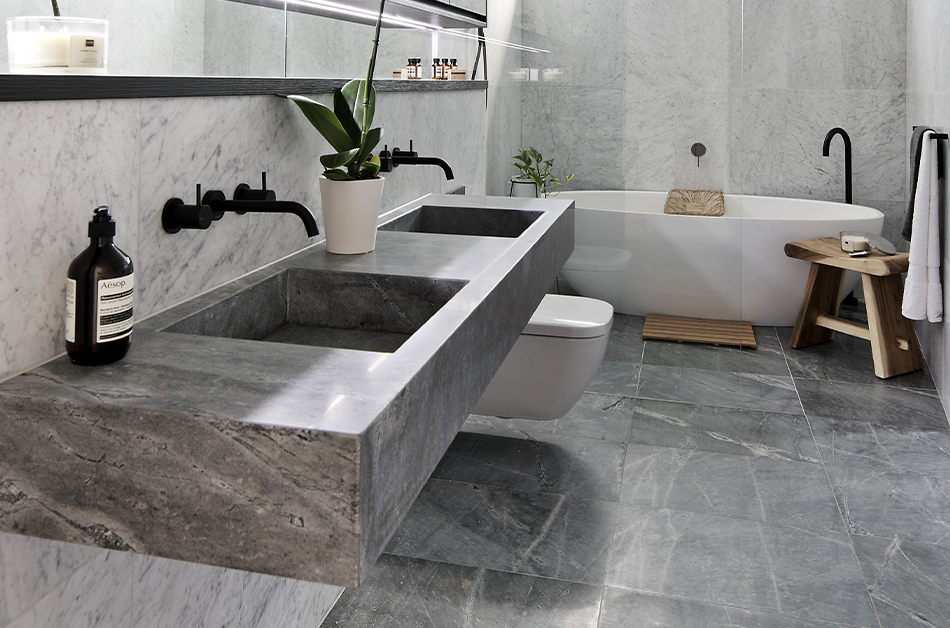
Written by Michael Mastro, Natural Stone Specialist, Sareen Stone.
This week we compare natural granite to porcelain granite lookalikes. You might be surprised to find out that all is not what it may seem!
Written by Michael Mastro, Natural Stone Specialist, Sareen Stone.
Each piece of natural stone displays the markings of its formation history so no two pieces will be the same. This is the first thing to understand when selecting natural stone for any project including stone around pools.
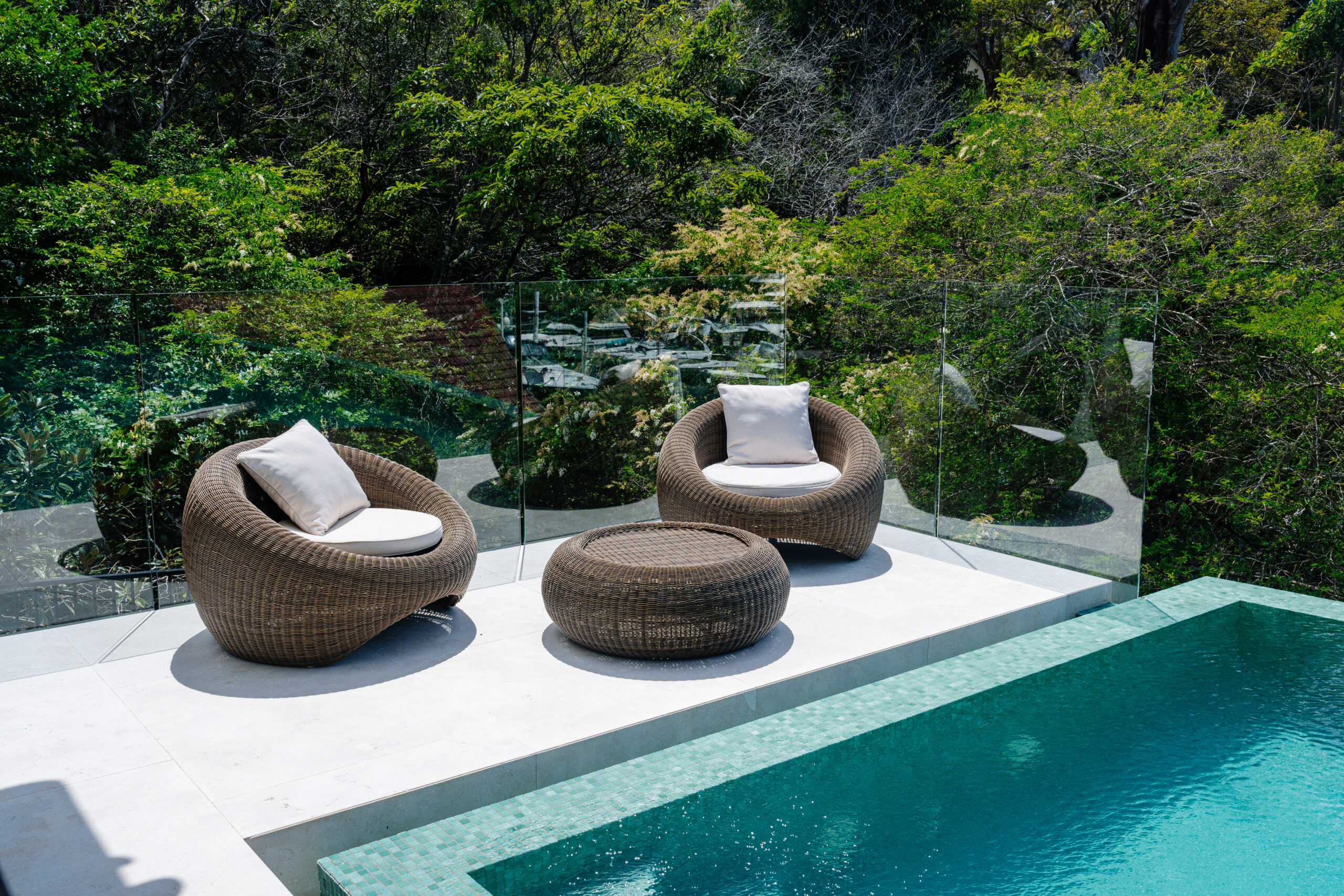
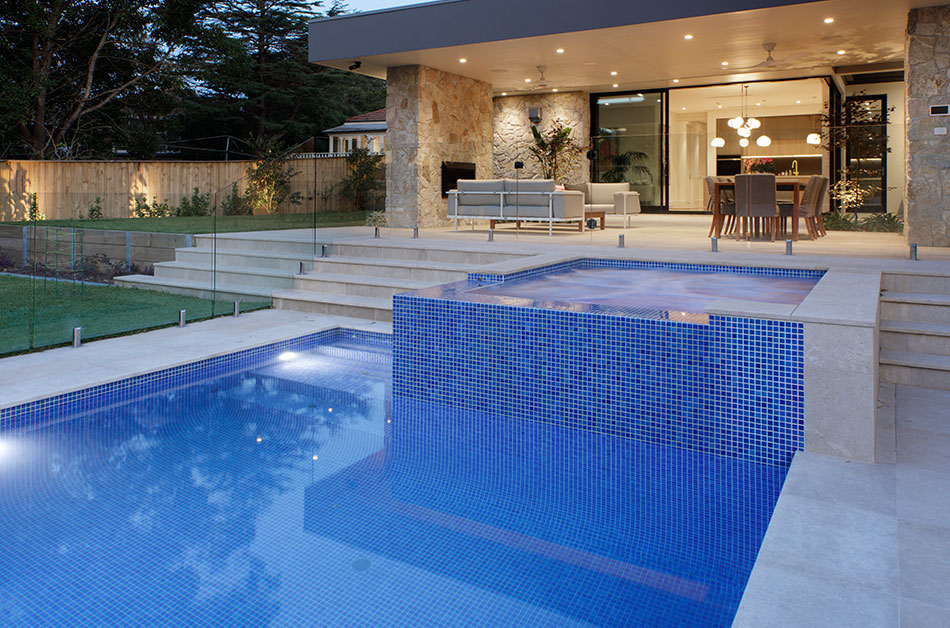
Project and image courtesy of Get Smart Landscaping and Freestyle Pools.
Other important considerations are suitability of the stone to the type of project, colour, tile size, surface finish, coping profile and slip rating. Then it’s time to hone in on the specifics:
Sareen Stone offers a customised design and sourcing service providing clients access to natural stone in various sizes and finishes. Lead time needs to be taken into consideration when ordering customised stone.
If you have any questions about your project needs, please contact one of our Natural Stone Specialists on 02 9666 9222.
To fill or not to fill, when it comes to travertine – that is the question! Our outdoor stone specialist, Gary Bazzana, explains why our customers usually fill in the holes in the travertine when using travertine outdoors.
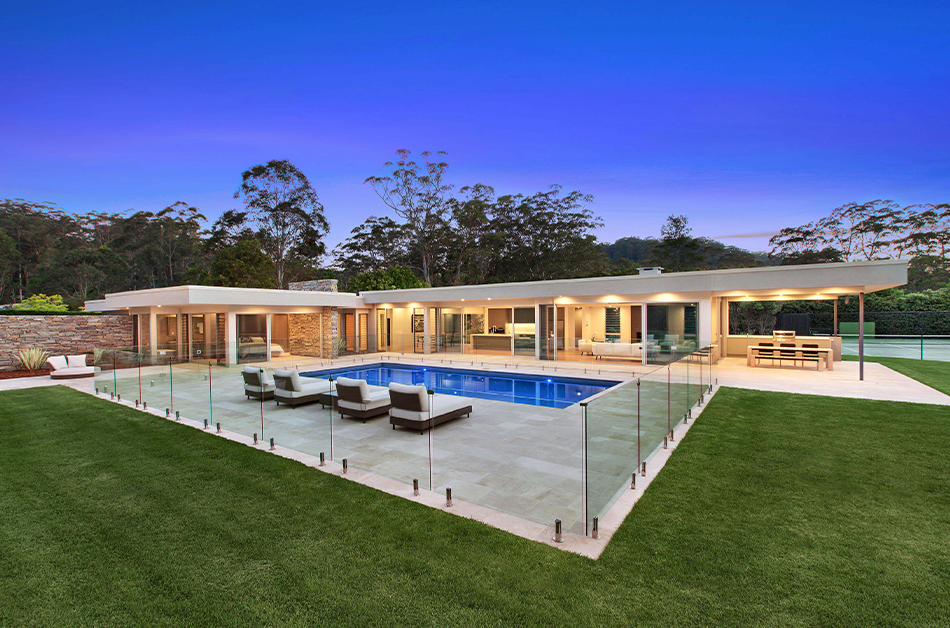
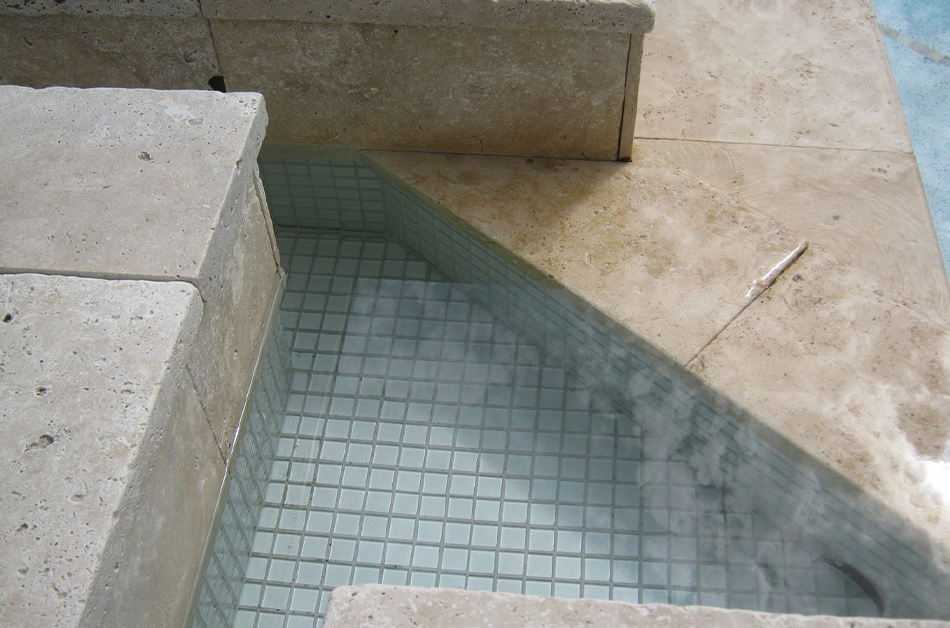
Travertine is a freshwater sedimentary stone composed of calcite which is usually formed at the mouth of hot springs or in limestone caves. It naturally has open holes that once held little bubbles of trapped gas.
The most popular finish for Travertine to be used outdoors is the tumbled finish.
The tumbled finish has a higher slip rating than the filled and honed tiles, favoured for indoor use.
Tumbled Travertine pavers and tiles are imported with the holes in the stone still open, known as “Tumbled and Unfilled”.
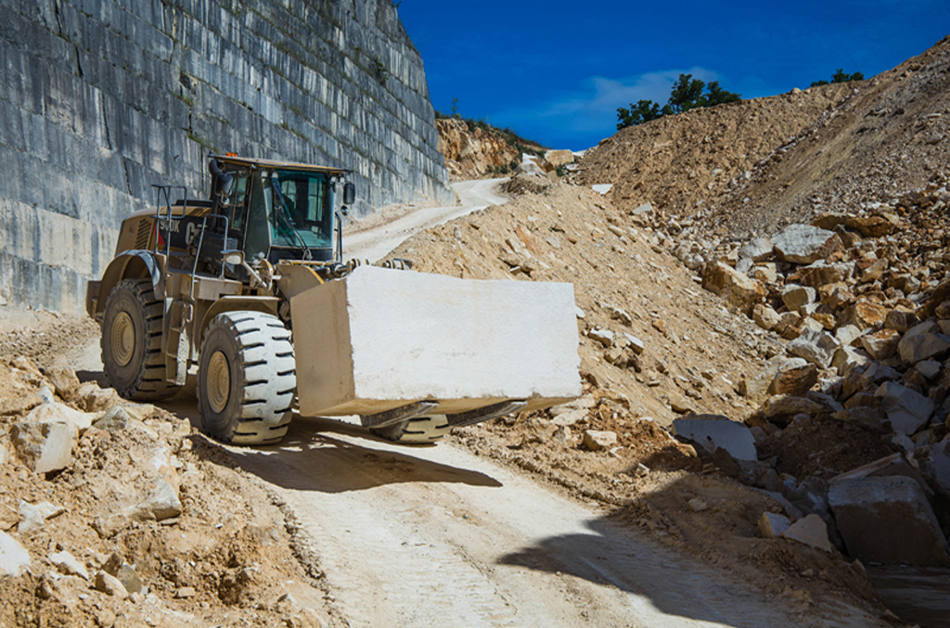
As importers and suppliers of natural stone our team regularly visits stone quarries throughout the world. But, how do we choose the right block from a quarry, how is it processed and how does that block of stone find its way to our warehouse?
In this handy step by step guide, thanks to the Swimming Pool and Spa Association (SPASA), we explain how to get your pool looking spectacular and ready for the busy swimming months ahead will get things back into shape. Print it out or save to your notes page on the phone so that it’s forever at your fingertips.
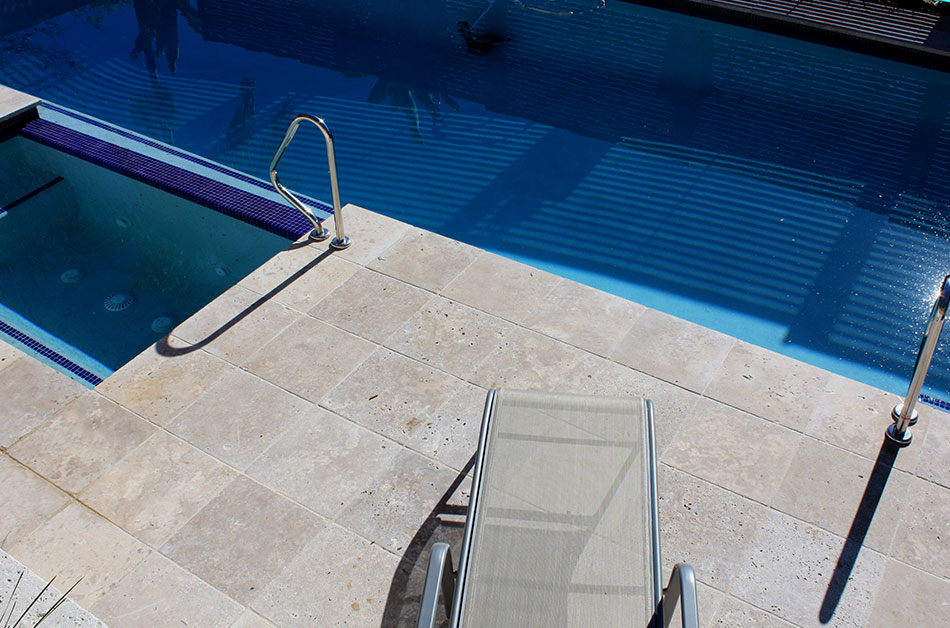
Pool season is pretty much here. We say ‘bring it on!’.
Hygge, pronounced ‘hue-gah’ is a way of life in Denmark. In essence Hygge brings focus to the simple things such as your daily well being and living in the present.
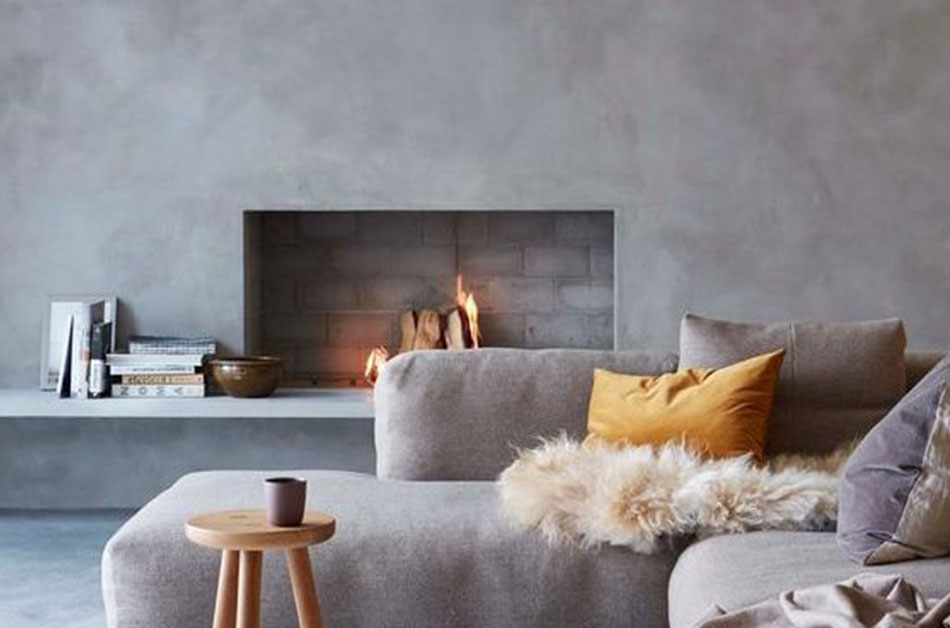
Hygge style complements a simple yet fulfilled lifestyle. Creating hygge means a cosy home with simple pleasures such as candles, a beautiful warm fireplace, neutral tones and wonderful textures.
We don’t have a word for ‘hygge’ in the English language but as hyggehouse.com explains, ‘the idea of hygge can be described as cosiness, charm, happiness, ‘contentedness’, security, familiarity, comfort, reassurance, kinship, and (simplicity). It is always cosy, charming and special’.
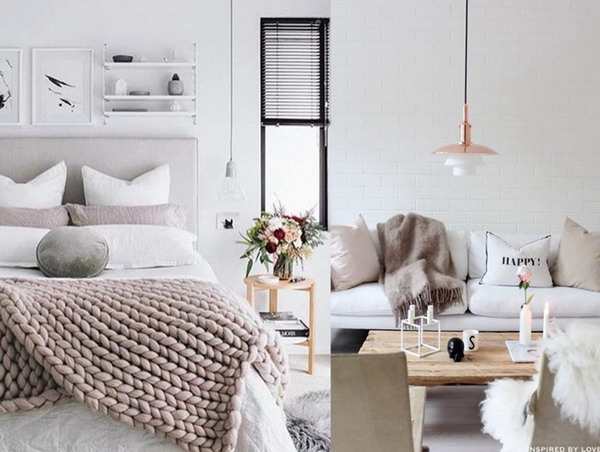
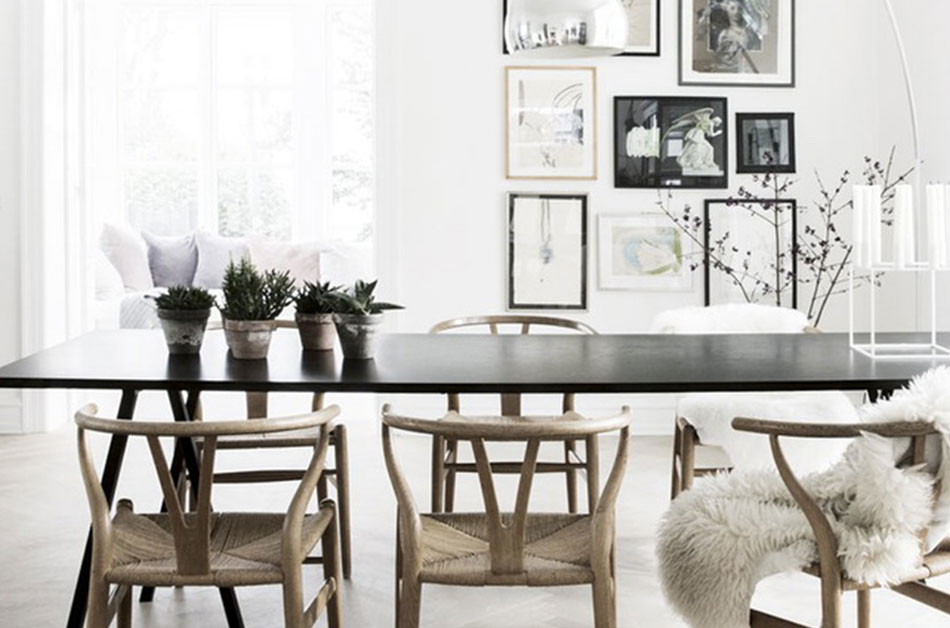
Image credit: amara.com The Lux Pad & image credit: AP Landscapes
Cobblestones vary in thickness and quality. Importing thicker cobblestones, at least 30mm, ensures they will be durable enough to withstand heavy vehicle traffic in outdoor areas such as commercial spaces, paths, and driveways, providing peace of mind.
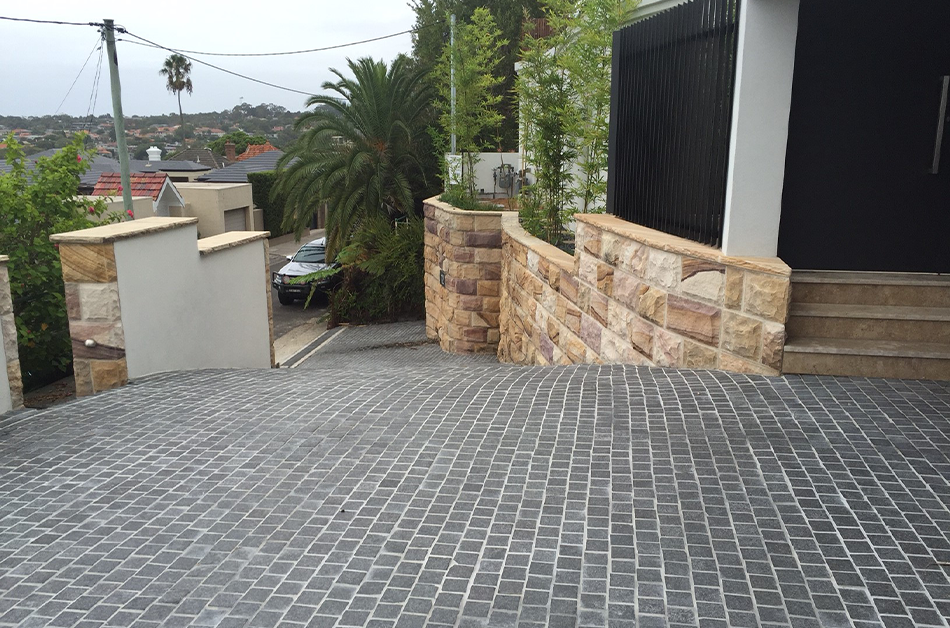
Cobblestones can vary in thickness, with some being as thin as 20mm and others as thick as 50mm or more. The thickness of a cobblestone can affect its durability and ability to withstand heavy traffic, which is why thicker cobblestones are often preferred for use in outdoor areas such as commercial spaces, paths, and driveways.
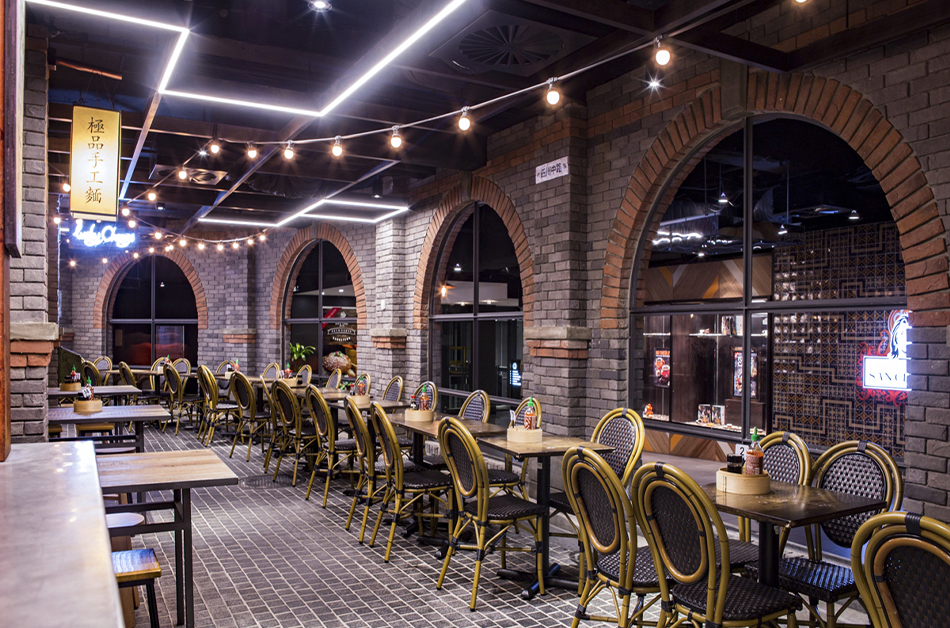
When choosing cobblestones for any alfresco space whether it be commercial or residential, it’s important to consider:
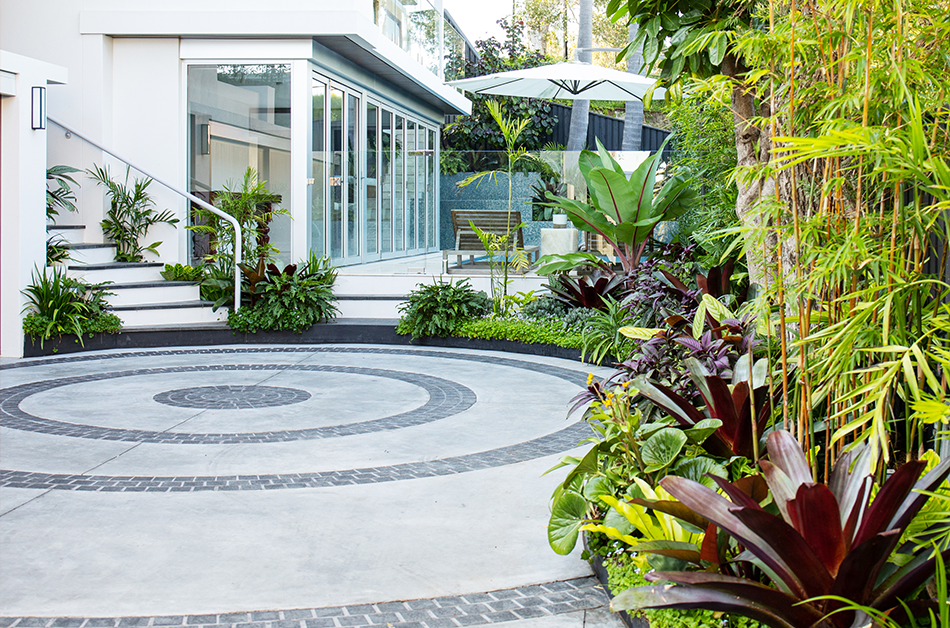
Sareen Stone’s range of cobblestones includes 30mm thick quartzite and granite cobbles to ensure you get a quality product that will not only stand the test of time – it will stand heavy vehicular traffic!
To order your samples or to ask any questions you may have about our cobblestones, tiles or pavers contact our knowledgeable Staff on info@sareenstone.com.au or phone 02 9666 9222. Our showroom is open Monday to Friday from 8.30am – 5pm and on Saturday by appointment from 9am – 1pm.
Getting the job right the first time, saves you time and money and more importantly means a first-class job and a happy client.
At Sareen Stone we can help when making decisions about glues grouts and adhesives and the best application to use depending on the type of stone you are installing.